They light up briefly when you start your car and you won’t see them again lighting up unless there is a need to communicate that action may need to be taken by the driver. As dashboard designs vary widely, as do the sophisticated functions, we take a look at the most important warning lights in a car.
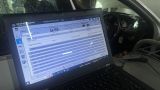
One warning light that should never be ignored is the brake system warning light. Modern cars have sensors for a number of parameters to be monitored. For example, the remaining thickness of the brake pads. The warning light might be connected to a number of sensors and while it tells the driver that there is an issue, it may not be immediately clear what the exact cause for the warning light coming on is. Crucial to the safety of the passengers in the car as well as other participants in traffic, German Motors recommends treating a brake light showing with utmost urgency: steer to the nearest qualified workshop and have the issue checked out. German Motors deploys a number of diagnostic tools, according to the car brands, to find out exactly what is happening and how to rectify the matter.
Similarly, the tyre pressure warning light is one to pay attention to. Thankfully, modern cars are equipped with Tyre Pressure Monitoring Systems (TPMS) and in case of loss of pressure, the driver can be alerted while driving. Tyre pressure loss should not be taken lightly as it impacts the behaviour of the car and could potentially be a safety threat.
Another very important warning light is that of the oil pressure warning light. A number of root causes could trigger this light to pop up. Engines require lubrication and therefore, dropping oil pressure is to be taken serious as expensive damage to the engine could occur. Leaks in the system could be one issue; a faulty oil pump another. As pistons and piston rings wear out, there could be an increasing amount of oil being burned, thus reducing the volume of oil in the system. Using the dip stick, one can assess if the oil levels have dropped to an alarming low level. While topping up the oil will be a first step, the situation should be monitored if the warning light comes on repeatedly. Should the oil level and quality be as per the manufacturers recommended levels, it might be time to have German Motors check the other components.
Especially with a well maintained vehicle, serviced by the German Motors’ team, one may not have to worry about any warning lighting up the dashboard. Not being used to seeing them (often), it may be advisable to refer to the owner’s manual of the car every now and then again. Reminding ourselves of the various warning lights that there are, we will know what to do in unlucky case one lightens up. Knowing the meaning behind each light also helps to calmly assess a situation. Each warning may require more or less urgency to address the matter in question.
Though the name “Warning Light” indicates seriousness, perhaps the fuel warning light is one that can spark some lighthearted discussion. Some divide drivers into two categories: the first one being drivers that would never risk the fuel level to drop to a level close to the warning light coming on. They would prefer to have a full or near full tank at all times, maybe having a tinge of range anxiety. Others could claim to know their vehicle and what milage they can archive with a full tank. Daring, they may continue to drive for a long time after the warning light has come on, trying to push the car for as long as possible before coming on. Which type are you?