The engine connects to the gearbox. The gearbox to the drive shafts. The drive shafts transfer the power from the engine to the wheels. Part of the drive shaft assembly are ball bearings, on which the wheels turn.
Filled with grease, the ball bearings of the drive shaft are house in so called boots, made from rubber. The grease prevents the metal of the balls inside the bearings to grind against their housing. However, over time, the ball bearings will wear out though. The impact of it can be felt.
Typical signs of worn-out ball bearings in the drive shaft are vibrations, typically getting worse with higher speeds and noises. Grinding noises, or clicking are indications that there could be something wrong with the ball bearings. German Motors would investigate the drive shafts’ conditions when customers report clunking sounds. Such noises occur when shifting gears, accelerating from a stop, or changing direction and can signal worn U-joints.
In severe cases, the car may also exhibit a pulling into one direction and difficulty steering. This could be mistaken for misalignment of the wheels, as German Motors staff knows. As such behaviour is deemed unsafe, it is recommended that it is investigated by professional technicians to identify the root cause.
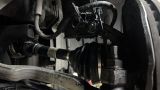
When the rubber of the boot tears, dirt may enter the ball bearings while at the same time the grease will be ejected through centrifugal forces. Eventually, the ball bearing may be running dry. This means that the ball bearings will be grinding metal to metal with no lubrication and additional friction added by the foreign objects entering.
Drivers may inspect the drive shafts for damage themselves. If the boots are torn, one can see this with the naked eye and the grease flung out may indicate the damage. If the drive shafts are moved by hand and feel wobbly, it may be time to have a professional workshop take care of the replacement of the ball bearings.