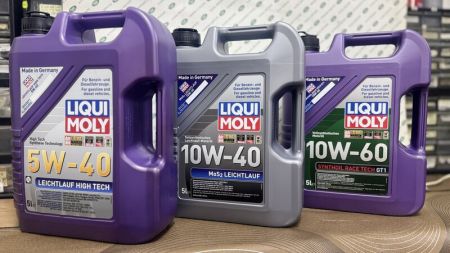
All engines require an adequate lubricant. Besides lubrication, these fluids provide vital functions in an engine. When sending your car to the workshop, you may be asked to chose between mineral or synthetic lubricants. Both sound like either would be a good choice, however they are significantly different.
Mineral oils are refined from crude oils. Typically, the molecular structure is somewhat inconsistent. This may lead to faster break down of the lubricant, especially at higher temperatures. Providing adequate lubrication, mineral oils are often cheaper as they do not contain many additives to improve performance.
On the other end of the shelf one will find synthetic oils. As soon as the manufacturer thinks about enhancing the performance of the lubricant by adding additives, one creates a synthetic lubricant. The actual characteristics depends on what the manufacturer tries to achieve: better heat dissipation can be one goal, longer service intervals another. While synthetic oils are generally offering better performance, they are more expensive.
As a compromise, there are blended oils, which are essentially a mix of mineral oils and synthetic ones. Bearing in mind that a blended oil takes some of either, mineral oil and synthetic oil, the offer a little bit of both worlds, but aren’t distinctively placed to be either money-savers or performance enhancers. German Motors offers a range of lubricants and technicians will be able to provide insights into which option may be the best one for your vehicle. The harsh climatic and driving conditions in Malaysia may require an upgrade of the lubricant to add an extra layer of protection to the engine.
When car manufacturers develop the engine, they have specific parameters in mind and the lubricants used have to gel with these. Therefore, German Motors recommends to pay close attention to the recommendations set out by the vehicles’ makers. A myth that German Motors will have to address frequently is the believe that one should not alternate mineral and synthetic oils between the oil changes. As long as the oils meet the stipulated requirements, e.g. viscosity grade, there is no problem in doing so, bearing in mind the above differences in cost vs performance.